Tuesday, May 22, 2018

Easy Hamstring Stretches to Alleviate Your Sciatica Symptoms

If you suffer from sciatica symptoms, you may have never considered that your tight hamstrings might be a contributing factor. But tight hamstrings place increased stress on your lower back—which in turn can aggravate your sciatic nerve. 
Here are 2 easy hamstring stretches that may help alleviate your sciatica symptoms: 

1. Supine Hamstring Stretch

The supine hamstring stretch is relatively simple, and it is gentle on your lower back. 
  • Begin by lying flat on your back. 
  • Next, bend your knees towards the ceiling—while keeping your feet flat on the ground.
  • Draw one knee towards your chest, and place your hands below your knee to aid this process. 
  • Extend your opposite leg out, and then repeat the entire process with your opposite leg. 

2. Wall Hamstring Stretch 

The wall hamstring stretch is more advanced than the supine stretch, and should be avoided if you are in acute pain.
  • Begin by lying flat on your back with your feet in front of a wall. 
  • Raise your knee up on your stabilizing leg, then slowly raise the opposite leg straight up against the wall. 
  • Try to achieve as close to a 90 degree angle as possible. If you are new to stretching, you can slightly bend your knee—and work your way up to 90 degrees over time. 
  • Repeat the entire process with your opposite leg. 

Additional Considerations 

If you are new to stretching, begin with holding each of the above stretches for 10 seconds. You can then slowly work your way up to 30 seconds.
Additionally, you can help remind yourself to perform the above hamstring stretches by tying your stretching to a daily activity. For example, every time you brush your teeth you can perform the above two stretches. 
Before starting any exercise program, make sure you first get the thumbs up from your doctor—you don’t want to risk further aggravating the underlying cause of your sciatica symptoms.
Call ABChiropractic Family & Wellness, your St Charles Chiropractic Headquarters for fast pain relief and wellness for the whole family.  636-916-0660.  We would love to help!

Wednesday, March 21, 2018

3 Simple Ways to Indulge Your Spine

As the years add up, a lack of care for your spine can lead to pain and put you at risk for serious complications.
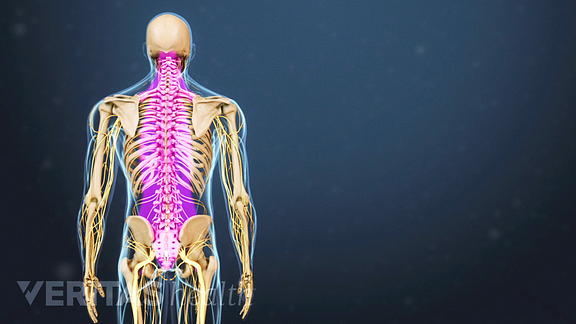
spine anatomy
Your spine is strong and flexible, but it is a common source of back pain.
Read:
 Spinal Anatomy and Back Pain
To help alleviate your discomfort and prevent future injuries, make these 3 spinal indulgences part of your daily routine:
Article continues below

1. Take a walk

Low-impact aerobic exercises, like walking, provide numerous benefits for your spine. For example, a daily walk strengthens the core muscles that support your spine, nourishes your spine by spurring healing nutrients and oxygen to the area, improves your overall flexibility, and reinforces the bone structure of your spine.
When you walk, make sure your practice good walking form. This means you need to walk with your shoulders straight, your head held up high, and your stomach slightly pulled in toward you.
If you suffer from a spinal condition, get the okay from your doctor before starting a walking regimen. And if you’re not an experienced walker, or if you're dealing with severe pain, it’s a good idea to begin with several short walks every day and slowly build up to a single long walk.

2. Follow a healthy diet

You may not realize it, but the food you eat every day plays a significant role in determining the overall health of your spine. To indulge your spine, avoid excess amounts of saturated fats (found in many baked goods, fried foods, and butter and/or cream). It’s also a good idea to eliminate processed foods from your diet, and to limit your intake of liquid calories (i.e. calories from soda and coffee-based drinks).
In place of the above unhealthy foods, make sure to include plenty of fruits, vegetables, whole grains, and lean sources of protein into your diet.
It may be difficult to make multiple abrupt changes to your diet, so you can start by changing one simple thing per week. For example, the first week you can cut out sugary drinks from your diet.
As an added bonus, a healthy diet will help you maintain a proper weight—which in turn can reduce the pressure on your spinal structures and minimize your back pain.

3. Use a standing desk

Sitting places 3 times as much pressure on the spinal discs in your lower back (lumbar spine) than standing. This means that excessive sitting can have serious consequences for your lumbar spine.
One way to reduce the negative effects of sitting is to indulge your spine by using a standing desk for all, or part of, the day. Here is how you can get started:
  • Standing desks can be expensive, so consider purchasing an affordable platform that you can place on top of your current desk.
  • Make sure you also purchase a pair of shoes that you feel comfortable standing in for long periods of time.
  • Set a goal of accomplishing one specific task per day using a standing desk. For example, you can answer your emails in the morning while standing.
  • Add an additional task each week, and slowly you will build your way up to spending the majority of your day standing up.
The above 3 spinal indulgences may seem like small changes to your daily routine, but over time they can add up to meaningful relief.

Learn more:

ABChiropractic Family & Wellness, located in St. Charles Missouri, is your home for fast pain relief and wellness for the whole family, invites all new patients to witness the benefits of Chiropractic care.  Call 636-916-0660 today and ask for our new patient special!

Monday, March 5, 2018

3 Little-Known Tips to Relieve Your Lower Back Pain on Road Trips

It’s no secret that car rides can be hard on your lower back—especially if you have to travel for an extended period of time.

The key to finding relief is to make a plan before you set off on your trip, and these 3 little-known tips can help you do exactly that:

1. Schedule regular stops for exercise

Sitting in one position for an extended period of time can tighten your back muscles, which in turn can lead to pain and even muscle spasms. So then, it’s a good idea to schedule stops every 30 to 60 minutes so you can walk around and stretch your lower back. This activity loosens your muscles and encourages blood circulation, bringing nutrients and oxygen to your lower back.
In addition to scheduling regular stops, try adjusting the position of your seat every 15 to 20 minutes. You can also pump your ankles to stimulate blood flow and to provide a slight hamstring stretch. Basically, any movement that’s safe to perform while driving can contribute to the relief of your back pain.

2. Bring a cold pack to relieve your lower back pain

More often than not, back pain is accompanied by inflammation. Applying a cold pack for 15 to 20 minutes can reduce this inflammation and numb sore tissues, both of which can relieve your pain.
Of course, finding relief through cold therapy on a road trip requires advanced planning. Here are a few simple options you can consider:
  • Before you leave on your trip, fill a cooler with reusable ice packs. You can also make your own customizable ice packs at home and toss them in the cooler.
  • Purchase instant ice packs at a pharmacy or general merchandise store. You can store these instant packs in the glove compartment of your car.
  • If you’re in a pinch, you can purchase ice and plastic bags on your trip—just make sure the bags are leak-free.
Regardless of which option you choose, remember to place a protective barrier between your skin and the cold pack to avoid ice burn.

3. Break up your trip into manageable stages

It seems counterintuitive, but sitting places more pressure on your spine than standing. So if your lower back pain is severe, consider breaking up your road trip into manageable stages. For example, rather than traveling 12 hours in one day, try 2 travel days instead. This strategy can help reduce the pressure on your spine—and it may encourage you to seek out unique tourist destinations. 
Of course, breaking up your trip may cost you additional time and money—but it’s worth it if you can avoid lower back discomfort.
I hope all of the above advice will help keep your lower back happy and healthy during your next road trip.

Learn more:

Call ABChiropractic Family & Wellness, your St. Charles Pain and Wellness Center at 636-916-0660.  We specialize in fast pain relief and wellness for the whole family.  

Tuesday, January 23, 2018

7 Pointers to Help You Find the Right Mattress for Your Back or Neck Pain

There is no magic formula when it comes to buying a new mattress, but these 7 tips can help you make an informed decision:
  1. Consult with your doctor. If you know the underlying cause of your back or neck pain, ask your doctor for a specific mattress recommendation. Of course, your doctor is not a mattress expert—but he or she may be able to offer some helpful advice based on their years of experience with patients.
  2. Look out for sales tricks. Mattress sellers sometimes describe their mattresses as "orthopedic" or "medically-approved," but there is no medical organization that officially certifies mattresses as such. A mattress may have orthopedic-friendly features, but this does not mean a medical body has necessarily tested or reviewed the specific mattress.
  1. Try out the mattress. When deciding on a new mattress, lie on the mattress for at least 10 to 15 minutes while at the store. This may seem strange, but buying a mattress is a big purchase—and it’s a decision you may live with for 5 to 10 years. Also, don’t forget to bring your partner along if you sleep with someone else every night.
  2. Don’t default to a firm mattress for your back pain. For whatever reason, many people assume that the firmer the mattress the better it is for your back pain. But the best mattress for most lower back pain sufferers may actually be a medium firm mattress. It’s important to note that there is a difference between firm support and firm feel—and typically you want a mattress with firm support but a comfortable feel. Of course, comfort is determined by your personal preference.
  3. Don’t forget about adjustable beds. As a general rule, if sitting in a recliner is better for your back or neck pain than lying down you will benefit from an adjustable bed. But an adjustable bed is not a type of mattress, but rather a base that can be adjusted to various positions. If you go with an adjustable bed, you will likely need to purchase a new mattress that is compatible with your new base.
  4. Check your pillow. Before you purchase a new mattress, check to see if the problem is actually with your pillow. For example, if you sleep on your side a pillow that is too high can place extra strain on your neck. Additionally, if you sleep on your stomach it’s typically a good idea to utilize an ultra-slim pillow—or to forego a pillow altogether.
  5. Shop at a store that specializes in mattresses. You may be able to find a better price online or at a big-box retailer, but the salespeople at a mattress specialty store typically know more about the product they’re selling. It’s also a good idea to shop at a mattress specialty store that carries mattresses from all the major manufacturers.
At the end of the day, purchasing a mattress for your back or neck pain is largely a matter of personal preference. But to help you feel more confident in your choice, make sure the store you purchase from offers a 30-day return policy.
Call ABChiropractic Family & Wellness, specializing in fast pain relief and wellness for all ages at 636-916-0660.  We are conveniently located between highway 70 and 94, in St. Charles, Missouri.  

Monday, December 4, 2017

The Importance of Aerobic Exercise for Easing Lower Back Pain

When back pain strikes, your inclination may be to rest and wait it out. This is typically a good idea for 24 to 48 hours, but prolonged rest may actually make your back pain worse.
Men on a stationary exercise bikeExercise biking and other gentle forms of exercise may be helpful in reducing your perception and feelings of pain. Read: Pain Relief and Aerobic Benefits of an Exercise Bike
In contrast to prolonged rest, low-impact aerobic exercise can help rehabilitate your spine and alleviate your pain.

The many benefits of low-impact aerobic exercise

Any kind of prolonged aerobic exercise stimulates the flow of blood and nutrients to your lower back—which in turn encourages healing and can help decrease your stiffness.
Low-impact aerobic exercise, such as walking, provides the extra advantage of minimizing the jarring of your spine. In addition, you may experience any of the following benefits from a daily routine of low-impact aerobic exercise:
  • Reduced instances of lower back pain—along with reduced levels of pain during an episode.
  • Preserved functional capacities, which means you can continue to work and participate in your hobbies.
  • Increased production of pain-fighting endorphins, which can help reduce your dependence on pain medication for lower back pain relief. An increase in your endorphin levels may also improve your mood and relieve symptoms of depression—a common condition for those suffering from lower back pain.

Options for low-impact aerobic exercise

You may be interested in low-impact aerobic exercise to help relieve your lower back pain—but what if you don’t like walking? Luckily, there are a number of great alternatives, including:
  • Water therapy. Aerobic exercise in a pool minimizes the strain on your lower back because the buoyancy of the water counteracts the effects of gravity.
  • Stationary bike. You can purchase a bike for use at home, or join a class with friends for additional motivation.
  • Elliptical trainer. An elliptical trainer reduces the stress on your spine by moving your legs in a continuous oval motion above the ground.
Regardless of which option you choose for low-impact aerobic exercise, aim to complete at least 20 minutes of exercise five days a week. If you’re new to exercising, begin with 5 minutes and slowly work your way up.
It’s a good idea to consult with your doctor before starting any exercise program. But once you’re cleared get moving right away—you might find significant relief from your lower back pain.

Learn more:

Call ABChiropractic Family & Wellness, your St. Charles, MO Fast Pain Relief Center at 636-916-0660.  We specialize in back pain relief for all ages.  

Wednesday, November 1, 2017

Is Poor Posture Causing Your Back Pain?

While at work, you slouch in your chair as you hurriedly finish a report. When you get home, you want to unwind so you spend a few hours weeding your garden with your back hunched forward. No big deal, right?
As it turns out, your poor posture may be contributing to your back pain.

How poor posture provokes back pain

You may not feel any ill-effects after sitting with poor posture for a few hours, but over time the stress that poor posture places on your spine can lead to anatomical changes in your spine. This in turn can provoke back pain through the constriction of your blood vessels and nerves. In addition, the stress from poor posture can lead to back pain by causing problems with your muscles, discs, and joints.
Back pain caused by poor posture may have any of the following characteristics:

How to maintain good posture

If poor posture can lead to back pain, it logically follows that good posture can help you avoid back pain. Here’s how to maintain good posture while walking, sitting, and lifting: 
Walk tall
It's easy to forget about your posture when you’re exercising or running errands, but your posture is no less important when you’re walking than when you’re sitting. While walking, it's important to look straight ahead of you and to keep your head balanced straight above your spine. Additionally, remain tall (avoid drooping your shoulders) while you are walking, and make sure to land on your heel and then gently roll forward to push off the front of your foot. 
Sit with support
If you’re like most people, you sit for at least eight hours every day. With so much of your life spent sitting down, it is imperative that you sit with proper posture. One common posture mistake many people make is the "office chair hunch," where a person sits at the front of their chair and hunches forward to reach their computer screen.
Instead of hunching forward, here is how to sit with proper posture at your office:
  • Keep your back flush against your chair with your shoulders tall and your head level over your spine.
  • When sitting at a desk, keep your arms flexed at a 75 to 90 degree angle at the elbows.
  • Keep your knees level with your hips—or sit with your knees slightly above your hips if seated at a desk.
  • Keep your feet flat on the floor. If you are unable to reach the floor, you can utilize a footrest.
Lift carefully
Improper lifting techniques can cause injury to the muscles, joints, and discs in your back. To help you avoid back pain, here are three simple rules for lifting both light and heavy objects:
  • Keep your chest forward. To ensure you keep your back straight while lifting, bend your hips—not your lower back—and keep your chest out. 
  • Lead with your hips. When changing directions while lifting, lead with your hips to avoid placing additional strain on your back
  • Keep weight close to your body. Keep the object you are lifting as close to your body as possible. 

Call ABChiropractic Family & Wellness, LLC, your home of fast pain relief and posture correction for the St. Charles community.  636-916-0660.  Cal today to see how we can help you with back pain and offer more help with posture correction.

Thursday, October 5, 2017

Whiplash can lead to arthritis

Most people will be involved in a car accident at least once every 5 years.  What most people don't know is  that even if you do not feel pain or any symptoms immediately after the accident, the likelihood of injury is extremely high.  In some occasions, you won't feel the repercussions of the car accident till years later once arthritis has set in, typically years later.  Here at ABChiropractic Family & Wellness, we specialize in fast pain relief related to whiplash.  We will bill the insurance company for your injuries, so there is typically no out of pocket expense.  We offer attorney referrals on request.  Our doctors are trained on how to treat whiplash injuries in order to alleviate the pain quick, and document your case appropriately to allow for compensation for your injuries/treatments.  X-rays are taken on site with our state of the art digital X-ray suite, and treatments are provided same day.  Our office is conveniently located between highway 70 and 94 on Zumbehl Rd in St. Charles, MO.  ABChiropractic Family & Wellness is located on 1817 Zumbehl Rd, St. Charles MO 63303.  Call 636-916-0660 to speak to Karen or Rachel to schedule your appointment before arthritis sets in!